
Standing Desk Ergonomics: Do They Actually Work?
Back when standing desks first came out, there was a lot of hype. And they were really expensive. I remember it being hard to find one for less than $1,000. Now that they've come down in price, they seem like a no-brainer. But is it worth replacing your desk?
It depends.

I've been in a lot of offices, homes and businesses, and I've seen a lot of standing desks. It is both refreshing and rare to see someone actually using one the best possible way: pressing the button and changing the height, often. To be fair, there may be plenty of people out there who already do this and never need to call me, because they've figured out how to feel good at their desk without my help. For the most part, though, what I see is people using them in a "fixed" position, meaning they either stand all day or sit all day. When I ask clients how much time they spend sitting versus standing, they often jump straight to, "I know I should stand more." I have to admit, I have never heard someone say, "I need to sit more." We've villainized sitting that much. The real question is whether height adjustable desks actually make a difference, and what kind of difference you're even looking for. Health? Productivity? Alertness?
My husband is a good example of doing this right. I bought him a height adjustable desk because his sciatica was flaring, and since he started using it, his sciatica has significantly decreased. He's surprised by how good he feels standing, though he still sits a fair amount too. He alternates, which is exactly the point. He's even rubbed off on a few of his colleagues: people who stop by his desk to chat end up in an impromptu standing meeting without really deciding to.
What Standing Desks Actually Do Well
Here's the good news: when people actually alternate between sitting and standing instead of parking in one position all day, the research backs it up. A six-month study following office workers found real drops in neck, shoulder, and low back pain when they moved between the two instead of staying seated the whole shift.
There's a stat that gets quoted frequently: call center workers using standing desks were 45% more productive over six months, from a well known Texas A&M study. Most of that boost seems to come from people feel less stiff and fatigued, not some cognitive boost from the act of standing itself. Comfortable people focus better. That might be the whole secret.
The honest takeaway: sit-stand desks work when they're used to break up static posture. This is what I see repeatedly with my clients. Integrating more movement and different positions into their day makes them feel better.
Why Don't People Change Their Position?
If you are used to staying in one position all day, like sitting, switching to alternating between positions and moving more isn't easy. Standing up requires a decision every single time, and most desks don't have any kind of prompt built in. Without a plan, "I'll stand more" turns into "Crap! It's 5:00 and I forgot to stand."
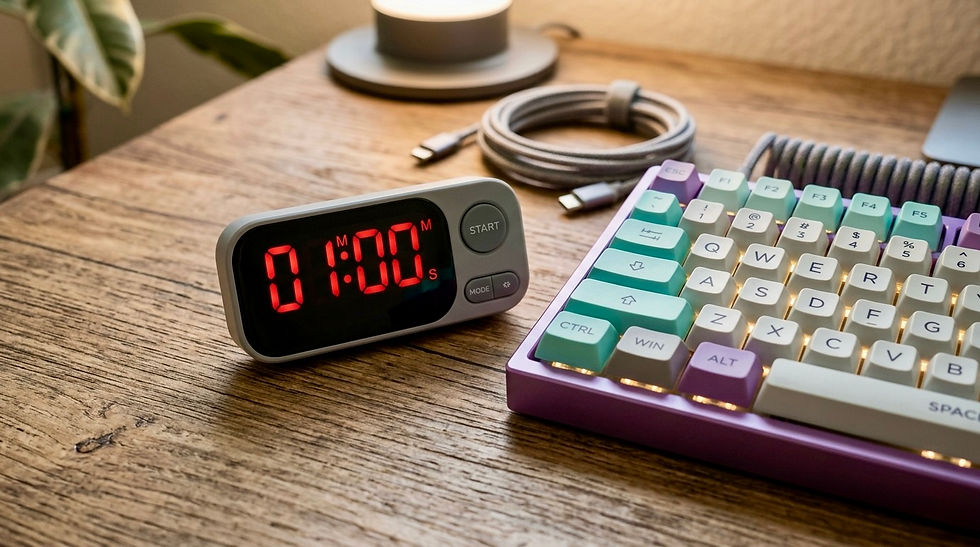
The fix isn't more motivation. It's a system. Set a timer, like Pomodoro. Pair standing with a specific trigger, like every time you finish a meeting or start a new task. Some of my clients do best with a simple visual reminder, a sticky note on the monitor, an app that nudges them. The desk is a tool. Having a system is what makes the tool useful.
Standing Isn't Automatically Better
This is the part that surprises people the most, and it's worth sitting with (pun intended). People standing still for two hours straight reported more discomfort and a worse mood by the end of it, which checks out if you've ever stood in a long line. Standing all day has its own costs: swelling in the feet, varicose veins, and low back and hip strain from staying locked in one position.
I wrote about this same principle when I covered why your back hurts: the goal isn't sitting versus standing. It's variety. The most well supported formula, sometimes called the 20-8-2 rule, works out to roughly 20 minutes sitting, 8 minutes standing, and 2 minutes moving out of every 30 minute cycle. Over a full workday, that results in 5 hours of sitting, 2 hours of standing, and 30 minutes of actual movement. Your body gets a rotation of load, not a single sustained posture in either direction.
For clients who are already in pain, I emphasize this specifically: move ahead of the pain, don't wait for it to tell you to move. Once pain shows up, you spend the rest of the day chasing it.
If you switch from always sitting to always standing, you haven't solved the problem. You've just relocated it.
Setting Up Your Standing Desk Correctly
A standing desk set up poorly creates the exact same problems as a bad chair, just vertically. If your monitor is too low when you stand, you'll flex your neck down. If your keyboard is too high, your shoulders creep up toward your ears. The same core principles from a proper desk setup apply here: elbows near 90 degrees, the top third of your monitor at eye level, and shoulders relaxed with your upper arms resting at your sides.
Standing perching is a real thing too, just like sitting perching. I see people lock their knees, shift all their weight onto one hip, or lean heavily on the desk with their forearms. None of that is neutral, and all of it adds up over hours.
If your job has you standing for long stretches, an anti-fatigue mat isn't a nice to have. It's a necessity. It changes how your feet and lower legs absorb load and makes a noticeable difference in end of day fatigue. Wearing good shoes can also help.
Who Should Be Cautious
If you have varicose veins, certain vascular conditions, or existing foot or knee issues, prolonged standing can aggravate those conditions. This doesn't mean skip the standing desk. It means be more deliberate about limiting continuous standing time, and check with your doctor if you have a condition that standing tends to worsen.
What to Check Right Now
Do you change the position of your height adjustable desk? How often?
Is the height right for you in both sitting and standing? Have a colleague or friend snap a few photos of you from the side while you're working. You might be surprised what you see.
Are you standing for more than an hour at a stretch without moving? Break it up. Standing still isn't the same as standing and moving.
Do you have an anti-fatigue mat if you stand for long periods? If you're on a hard floor for hours, get one.
The Bottom Line
Is a standing desk worth the hype? It all matters in how you use it. You decide.
If you want help figuring out a setup and routine that actually works for your day.
A standing desk is one piece of a bigger picture. If you're just getting started with ergonomics, start here: What Is Ergonomics and Why Does It Matter?
Related posts:
FAQs
Do standing desks actually work?
Yes, but for a specific purpose: reducing the discomfort that comes from staying in one static posture all day. Research shows real drops in neck, shoulder, and back discomfort when people alternate between sitting and standing. The benefit comes from variety, not from standing being inherently superior to sitting.
Do standing desks really boost productivity by 45%?
That figure comes from a specific study of call center workers and is a real result, but it's an outlier. More conservative research suggests any productivity gain is modest and mostly a byproduct of reduced discomfort and fatigue, not a direct cognitive benefit from standing itself.
Is it bad to stand all day instead of sitting all day?
Yes. Prolonged static standing has its own downsides, including increased discomfort, swelling in the feet, varicose veins, and low back and hip strain. The goal isn't to replace sitting with standing. It's to alternate between both, plus movement.
What's the ideal ratio of sitting to standing?
A well supported formula is roughly 20 minutes sitting, 8 minutes standing, and 2 minutes moving for every 30 minutes of work. Over a full workday, that's about 5 hours sitting, 2 hours standing, and 30 minutes of movement.
Why don't I ever change the height on my standing desk?
Changing position requires a deliberate decision every time, and without a trigger like a timer or a specific cue, it's easy to forget. Building in a simple reminder system makes a bigger difference than motivation alone.


Comments